

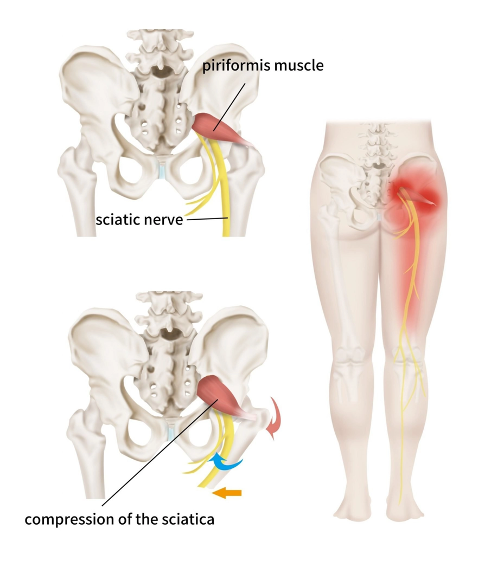
Piriformis Syndrome is a condition in which the piriformis muscle, located deep in the buttock region, becomes tight, irritated, or inflamed.
This muscle lies very close to the sciatic nerve, the largest nerve in the body, which runs from the lower back through the hips and down the legs.
When the piriformis muscle becomes overly tight or spasms, it can compress the sciatic nerve, leading to pain, numbness, or tingling sensations that may radiate down the leg.
Common Symptoms
People with Piriformis Syndrome may experience:
- Deep pain in the buttock or hip
- Radiating pain down the back of the thigh or leg
- Numbness or tingling sensations in the leg
- Increased pain when sitting for long periods
- Pain during walking, running, or climbing stairs
- Tightness or stiffness in the hip and gluteal area
These symptoms can closely resemble those of a herniated disc, which often leads to confusion and delayed or incorrect treatment.
Causes and Contributing Factors
Piriformis Syndrome can be triggered by several factors, including:
- Prolonged sitting (e.g., desk work)
- Intense exercise without proper stretching
- Tight or imbalanced hip muscles
- Repetitive hip movements (running, cycling)
- Injury from falls or accidents
- Poor posture during sitting or walking
When the hip muscles are overused or strained, tension builds up over time, eventually leading to muscle tightness and nerve compression.
How Physical Therapy Can Help
Piriformis Syndrome can be effectively managed with targeted physical therapy. Treatment focuses on:
- Relieving pressure on the sciatic nerve
- Reducing muscle tightness and inflammation
- Restoring muscle balance in the hip
- Preventing recurrence
A physical therapy program may include:
• Manual Therapy
Hands-on techniques to release the piriformis muscle and surrounding tissues, reducing nerve compression.
• Ultrasound Therapy
Uses sound waves to decrease inflammation and promote tissue healing.
• Electrical Stimulation
Helps reduce pain and muscle tension.
• Stretching & Therapeutic Exercises
Improves flexibility and strengthens the hip muscles.
• Posture & Movement Correction
Addresses daily habits such as sitting, walking, and exercise techniques to prevent further strain.
Early Treatment Leads to Better Outcomes
Many people ignore persistent buttock or hip pain until it begins to radiate down the leg or interfere with daily activities.
You may be experiencing Piriformis Syndrome if you have:
- Deep buttock pain on one side
- Pain radiating down the leg when sitting
- Tight hips when standing up or walking
- Frequent hip pain during exercise
- Increased discomfort during long car rides
Early and accurate treatment can significantly improve symptoms and help you return to normal activities.
Personalized Care at P.S. Center
At P.S. Center, we understand that hip and radiating leg pain does not always originate from a single cause.
Our physical therapists perform a comprehensive assessment of your body structure, movement patterns, and muscle balance to create a personalized treatment plan.
Our goal is not only to relieve pain temporarily, but to help you restore confident, pain-free movement in your daily life.