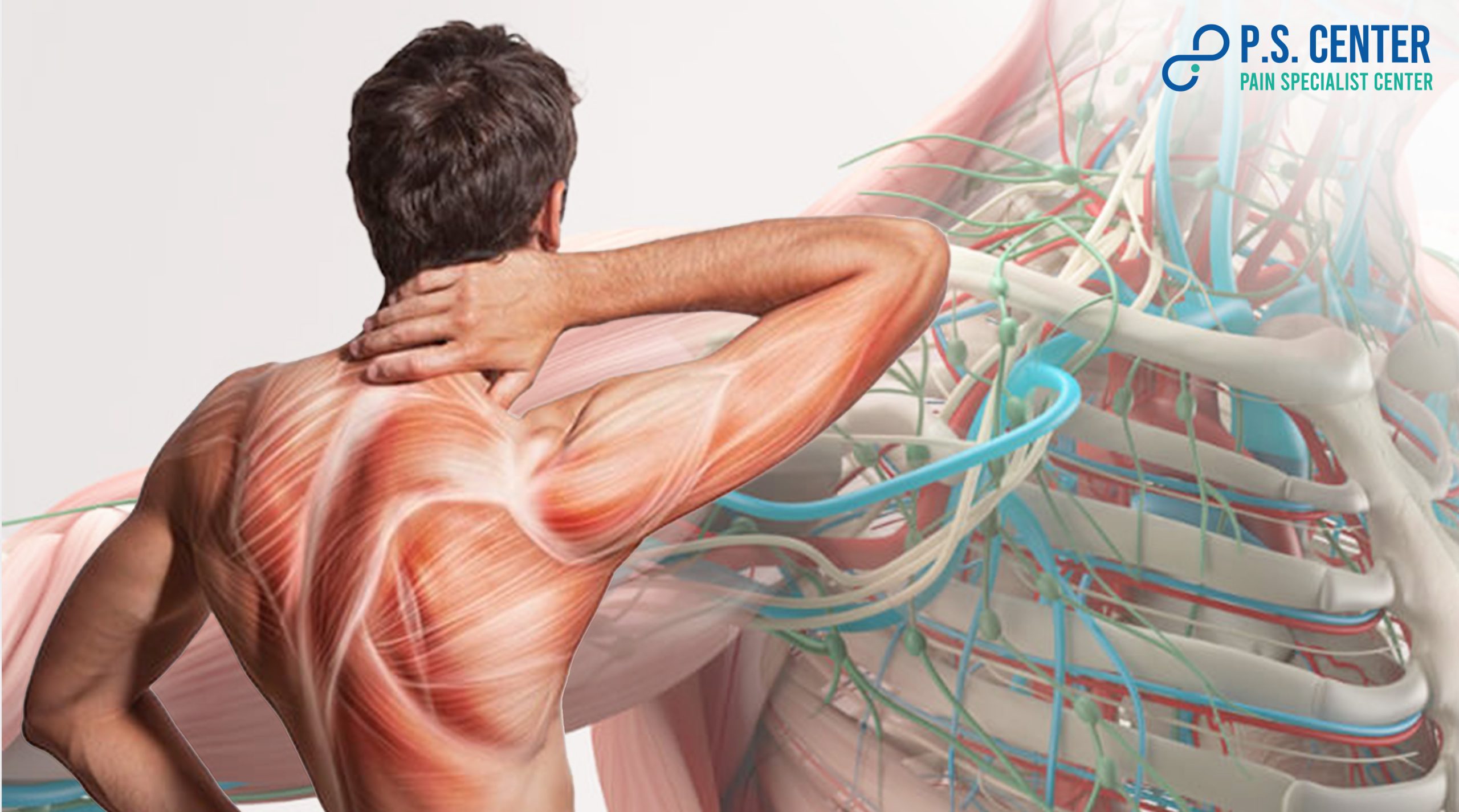
Pain is often seen as the enemy, but it actually serves a vital purpose. Think of it as your body’s built-in alarm system. When you step on something sharp or touch a hot surface, pain sends an urgent signal to your brain: “Stop! Danger! Move away!”
Without this alarm, we wouldn’t know when to rest an injury or protect ourselves from damage. However, not all alarms sound the same. To treat pain effectively, you first need to understand its source.
The two most common culprits are muscles and nerves, and they require very different approaches.

1. Muscle Pain (The “Deep Ache”)
This is the most common type of discomfort. It is usually caused by mechanical stress—like lifting something heavy, “Office Syndrome” from poor posture, or simply sleeping in an awkward position.
- What it feels like: A dull, deep ache, stiffness, or a “heavy” sensation.
- Where it is: It is usually localized. You can typically point to the exact spot on your shoulder or back where it hurts.
- The clues: It usually hurts more when you move that specific muscle or press on the sore spot.
2. Nerve Pain (The “Electric Shock”)
Nerve pain is more complex. It happens when the nerves themselves—the wires carrying messages to the brain—are pinched, irritated, or damaged.
- What it feels like: Sharp, intense, and sudden. People often describe it as burning, stabbing, or like an electric shock.
- Where it is: It travels. Because nerves run like long wires, a pinched nerve in your lower back might send pain shooting all the way down your leg (like Sciatica).
- The clues: You might feel numbness, tingling (“pins and needles”), or weakness. It can happen spontaneously, even when you are resting perfectly still.
Why the Difference Matters
Treating nerve pain as if it were muscle pain can lead to frustration. For example, deep pressure massage might feel great on a tight muscle, but it can aggravate an inflamed nerve.
If you aren’t sure which type of pain you are experiencing, or if the pain persists, it is important to see a specialist for a proper assessment rather than guessing. Understanding the signal your body is sending is the first step toward true recovery.