Postpartum diastasis recti, also known as abdominal muscle separation, is a common condition that occurs during pregnancy and may persist after childbirth. It develops when the two sides of the rectus abdominis muscles move farther apart as the connective tissue along the midline of the abdomen stretches to accommodate the growing uterus and baby.
Some mothers may notice that their abdomen continues to protrude after giving birth or that a visible ridge appears along the midline of the abdomen when sitting up, getting out of bed, or engaging their abdominal muscles.
However, a protruding abdomen after childbirth does not necessarily indicate diastasis recti, as several other factors may contribute to changes in abdominal appearance.
Understanding this condition can help mothers make informed decisions about postpartum recovery and choose appropriate rehabilitation strategies.
What Is Postpartum Diastasis Recti?
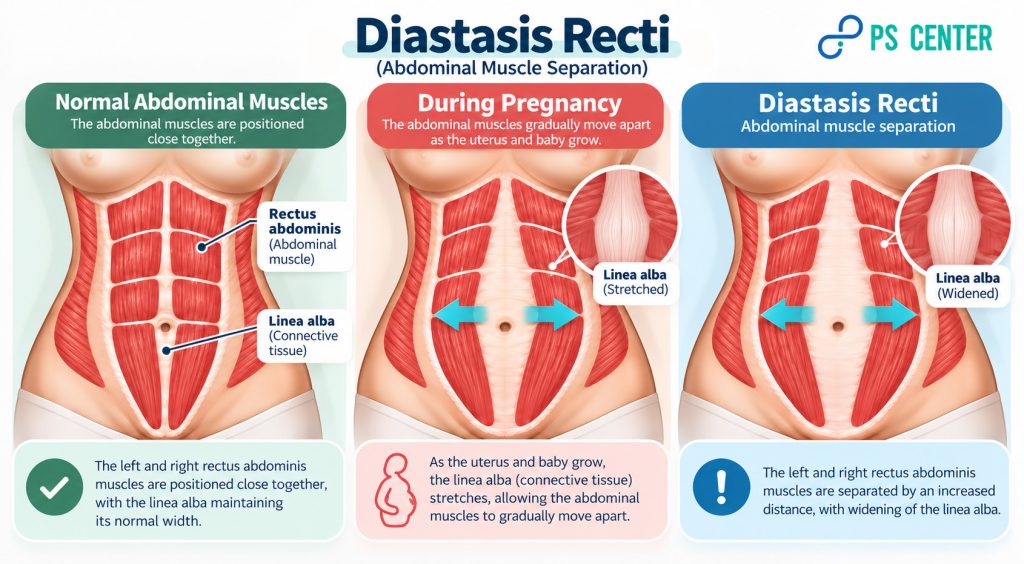
The rectus abdominis muscles are two vertical muscles located on either side of the front of the abdomen. They are connected by a band of connective tissue called the linea alba, which runs along the midline of the abdominal wall.
During pregnancy, the linea alba naturally stretches and widens as the abdomen expands to accommodate the growing baby.
When the distance between the two rectus abdominis muscles increases, along with changes in the tension and structure of the connective tissue, this is known as Diastasis Recti Abdominis (DRA).
Although abdominal separation is a normal adaptation during pregnancy, the extent and rate of recovery after childbirth can vary from person to person.
Symptoms of Postpartum Diastasis Recti
Symptoms of diastasis recti vary between individuals. Common signs and symptoms may include:
Persistent abdominal bulging: The abdomen may continue to appear rounded or protruding after childbirth, even after body weight has decreased.
Visible abdominal doming: A ridge or bulge may appear along the midline of the abdomen when sitting up, getting out of bed, or engaging the core muscles.
Reduced core strength: Some mothers may experience weakness or difficulty controlling their abdominal muscles.
Difficulty with daily activities: Movements such as getting out of bed, lifting objects, carrying a baby, or performing activities that require core stability may feel more challenging.
Back or pelvic discomfort: Some individuals may experience lower back or pelvic discomfort alongside abdominal muscle separation.
However, these symptoms are not always caused by diastasis recti. Some individuals may have an increased distance between their abdominal muscles without experiencing noticeable symptoms or functional limitations.
Therefore, a comprehensive assessment should consider not only the separation itself but also muscle function, movement control, and other contributing factors.
Causes and Contributing Factors of Diastasis Recti
1. Abdominal Expansion During Pregnancy
As the uterus and baby grow, the abdominal wall gradually stretches to accommodate the increasing size of the abdomen.
This natural adaptation causes the linea alba to widen and the rectus abdominis muscles to move farther apart.
After childbirth, the distance between the abdominal muscles may gradually decrease as the body recovers. However, the extent and timing of recovery vary among individuals, and some degree of separation may persist.
2. Changes in Muscles and Connective Tissue
Pregnancy causes changes in the length, tension, and function of the abdominal muscles and surrounding connective tissue.
These changes may affect the ability of the abdominal wall to generate tension, support the trunk, and coordinate movements during everyday activities.
3. Individual Factors and Pregnancy History
Several factors may be associated with diastasis recti, including:
Multiple pregnancies
Twin or multiple pregnancies
Individual body structure and tissue characteristics
Previous physical activity and exercise habits
Differences in connective tissue elasticity
These factors may influence the development or persistence of abdominal separation, although their individual effects can vary.
How Can You Tell If You Have Diastasis Recti?
Some mothers may notice a visible gap or bulging along the midline of their abdomen when transitioning from lying down to sitting up.
However, self-observation alone cannot reliably confirm the condition or determine its severity.
A qualified physiotherapist can perform a detailed assessment of the abdominal wall, including:
The distance between the rectus abdominis muscles above, at, and below the belly button
The tension and function of the linea alba
Abdominal muscle strength and coordination
Core stability and movement control during functional activities
Importantly, the assessment should not focus solely on the width of the separation, whether measured in centimeters or finger widths.
The function of the abdominal wall, associated symptoms, and the individual’s ability to perform daily activities are equally important when developing an appropriate rehabilitation plan.
How Is Postpartum Diastasis Recti Treated?
Treatment and rehabilitation for diastasis recti generally focus on improving abdominal muscle function, core stability, and movement control.
The most appropriate approach depends on the individual’s symptoms, physical condition, and recovery goals.
1. Physiotherapy and Personalized Exercise Programs
Physiotherapy can play an important role in supporting postpartum recovery by helping mothers gradually restore abdominal muscle strength and coordination.
A personalized rehabilitation program may include:
Breathing exercises to improve coordination between the diaphragm and abdominal muscles
Deep abdominal muscle activation and control
Core stabilization exercises
Progressive strengthening of the abdominal muscles
Functional movement training for daily activities
Exercise intensity and difficulty can be gradually increased according to individual strength, comfort, and recovery progress.
The goal is not simply to reduce the distance between the abdominal muscles but also to improve overall abdominal wall function and confidence in movement.
2. Posture and Daily Movement Modifications
Simple adjustments to everyday movements can help mothers manage abdominal pressure and perform activities more comfortably during recovery.
These may include:
Adjusting techniques for getting in and out of bed
Practicing appropriate lifting and baby-carrying movements
Avoiding unnecessary breath-holding or excessive straining
Modifying exercises or activities that cause uncomfortable or poorly controlled abdominal bulging
These strategies can be incorporated into daily routines while gradually rebuilding strength and movement confidence.
When Should You See a Physiotherapist?
Consider consulting a physiotherapist if you experience:
Persistent or noticeable abdominal bulging after childbirth
Visible doming or ridging along the abdominal midline during movement
A feeling of abdominal weakness or reduced core stability
Difficulty performing daily activities that require abdominal strength
Ongoing back or pelvic discomfort
Concerns about your postpartum recovery progress
A comprehensive physiotherapy assessment can help identify contributing factors, evaluate abdominal muscle function, and guide an individualized rehabilitation program.
Conclusion
Postpartum diastasis recti is a common condition associated with the natural changes that occur in the abdominal wall during pregnancy.
Recovery varies from person to person, and an increased distance between the abdominal muscles does not necessarily indicate a serious problem or significant functional impairment.
A thorough assessment can help evaluate connective tissue characteristics, abdominal muscle strength, core stability, and movement patterns to develop a rehabilitation plan tailored to each mother’s needs.
At PS Center Physiotherapy, we believe that every body is different and that effective rehabilitation begins with understanding each individual’s condition.
Our physiotherapy approach emphasizes comprehensive assessment and personalized rehabilitation planning to support postpartum recovery, improve movement confidence, and help mothers return to their daily activities with greater comfort and strength.