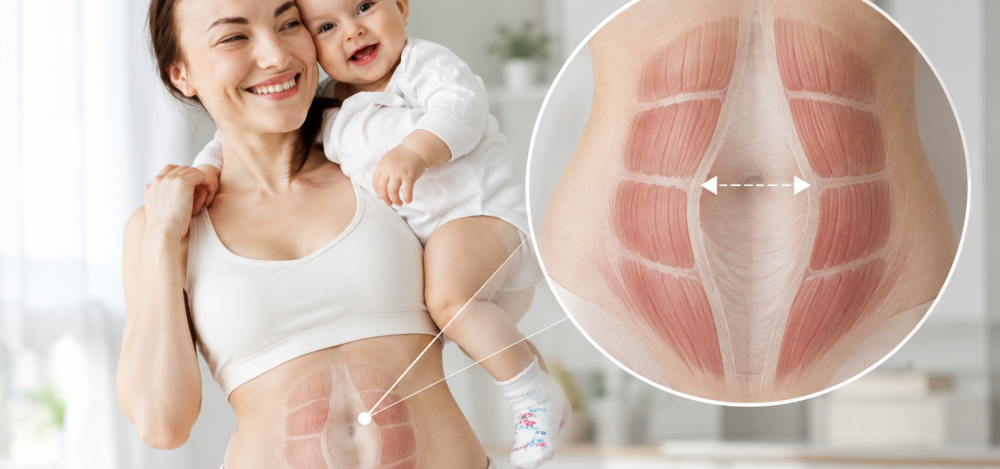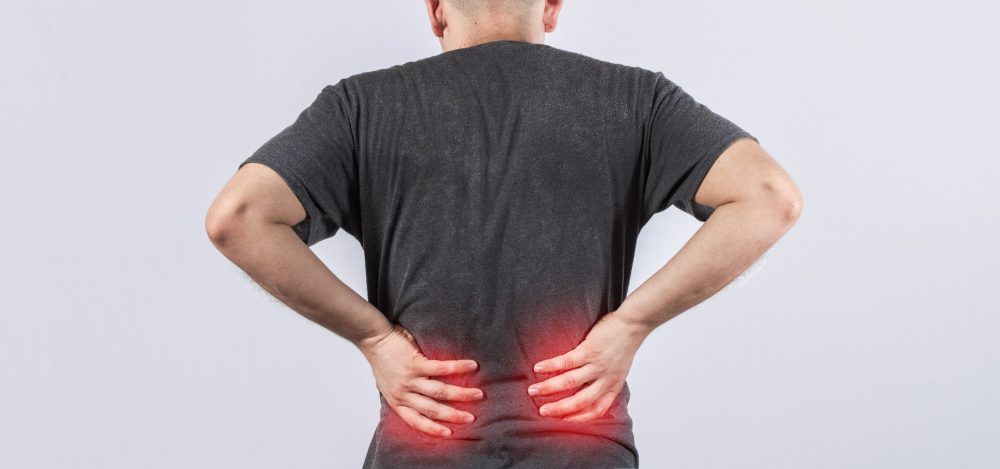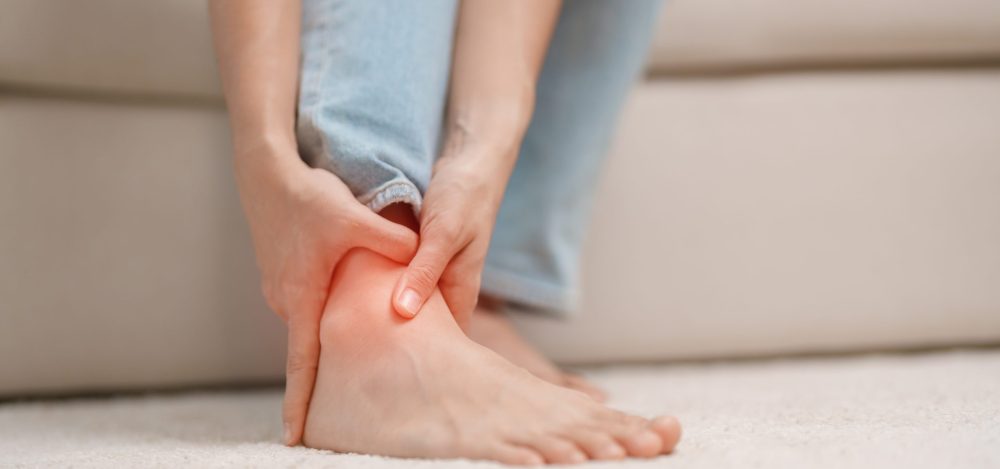
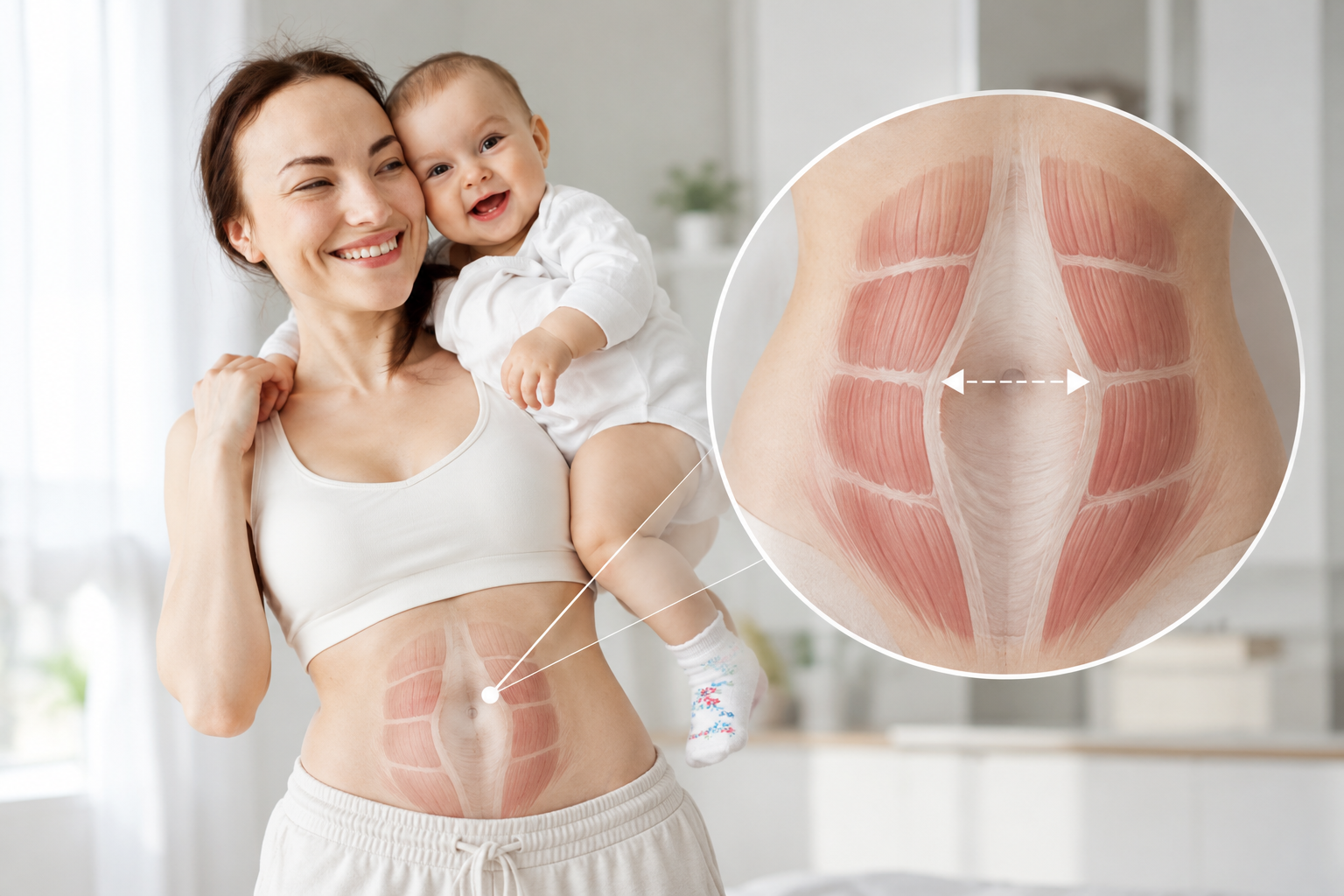
After childbirth, many mothers may notice that their abdomen still protrudes, feels loose, or has not returned to its pre-pregnancy shape, even after losing weight. Some may find that their old clothes no longer fit or experience weakness in their abdominal muscles, particularly when getting out of bed, lifting their baby, or exercising. These symptoms may be associated with Diastasis Recti, also known as abdominal muscle separation after childbirth.
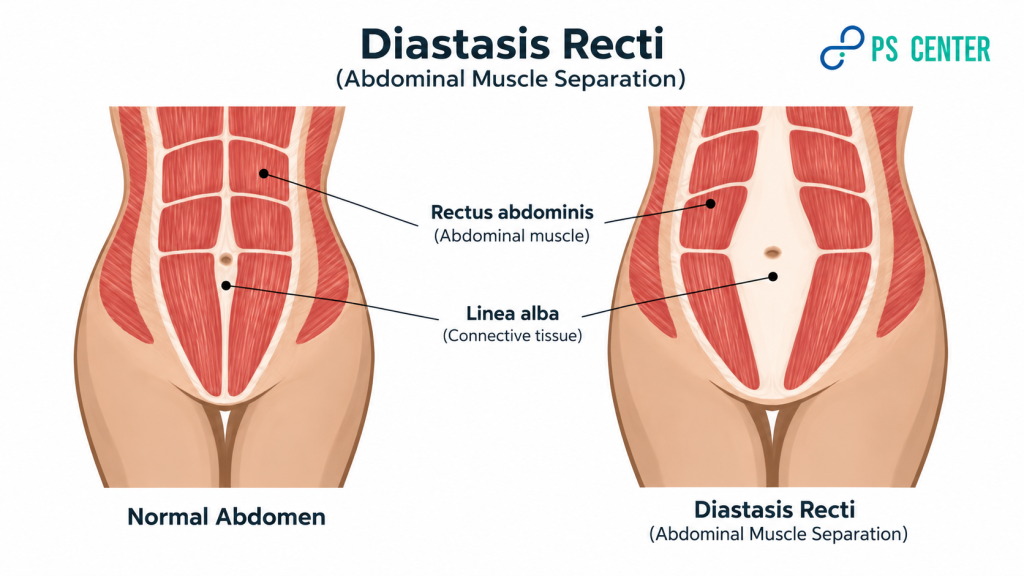
Diastasis Recti occurs when the two sides of the rectus abdominis muscles, located along the front of the abdomen, move farther apart as the connective tissue between them (linea alba) stretches during pregnancy.
Although abdominal muscle separation is a natural and common change during pregnancy, some mothers may continue to experience symptoms or functional difficulties after childbirth. In these cases, physical therapy can help improve muscle strength, coordination, and overall physical function.
How Can Physical Therapy Help with Diastasis Recti Recovery?
Physical therapy for Diastasis Recti focuses on more than simply reducing the gap between the abdominal muscles. It also emphasizes restoring core muscle function, managing intra-abdominal pressure, and improving the ability to perform daily activities safely and effectively.
1. Assessing Abdominal Muscles and Overall Body Function
A physical therapist begins with a detailed medical history review and physical assessment to evaluate the width of the abdominal separation, the tension and depth of the connective tissue along the midline, and the function of the deep abdominal muscles.
The assessment may also include breathing patterns, pelvic floor muscle function, posture, and movement control.
Additional factors may be considered, such as:
Posture and body alignment
Movements involved in sitting up, standing, and lifting
Type of childbirth (vaginal delivery or cesarean section)
Daily activities that cause abdominal bulging or discomfort
This comprehensive assessment helps identify individual needs and provides a foundation for a personalized rehabilitation program.
2. Strengthening and Retraining the Core Muscles
The deep abdominal muscles play an important role in supporting and stabilizing the trunk. Rehabilitation often begins with improving muscle awareness and coordination through controlled breathing and gentle exercises before progressing to more challenging movements.
Exercises may include:
Breathing exercises combined with abdominal muscle activation
Safe and controlled core muscle engagement
Progressive strengthening of the abdominal, hip, and other muscles involved in movement
The type and intensity of exercises are adjusted according to each individual’s abilities and recovery progress.
Rather than increasing exercise intensity too quickly, physical therapists focus on maintaining proper movement control and managing excessive abdominal bulging or discomfort during exercise.
3. Improving Intra-Abdominal Pressure Management
Everyday activities such as getting out of bed, carrying a baby, lifting objects, and exercising involve changes in intra-abdominal pressure.
Physical therapists help mothers develop appropriate breathing techniques, muscle coordination, and movement strategies to manage this pressure effectively.
This may include learning how to:
Coordinate breathing with movement
Avoid unnecessary breath-holding or excessive straining
Engage core muscles appropriately during daily activities
These techniques can help improve movement efficiency, comfort, and confidence when performing everyday tasks.
4. Restoring Pelvic Floor Function and Movement Control
The abdominal muscles and pelvic floor muscles work together to support the trunk and manage pressure within the abdomen.
For this reason, rehabilitation may also involve assessing and retraining pelvic floor muscle function, particularly in mothers experiencing symptoms such as:
Urinary leakage
A sensation of heaviness or pressure in the pelvic region
Difficulty maintaining trunk stability during movement
However, not everyone requires the same pelvic floor exercises. A physical therapist will recommend an appropriate rehabilitation approach based on each individual’s assessment findings and symptoms.
5. Supporting a Gradual Return to Exercise
As muscle coordination, strength, and movement control improve, physical therapists can gradually adjust the rehabilitation program to prepare mothers for more demanding activities.
These may include lifting heavier objects, brisk walking, strength training, or returning to their preferred exercise routines.
The goal is to help mothers progressively rebuild strength, improve physical function, and return to an active lifestyle with greater confidence.
Postpartum Diastasis Recti Rehabilitation at PS Center Physiotherapy
At PS Center Physiotherapy, we believe that every body has different needs and recovery goals.
Our approach focuses on understanding each individual’s physical condition through detailed assessments of movement patterns and muscle function. These findings help guide a personalized rehabilitation plan tailored to each person’s abilities, needs, and goals.
If you are experiencing abdominal muscle separation after childbirth or are unsure how to safely return to exercise, consulting a physical therapist can help you better understand your body and identify an appropriate rehabilitation approach.
Because effective postpartum recovery is not just about achieving a flatter abdomen — it is about restoring strength, improving movement, and helping you return to everyday life with confidence.